

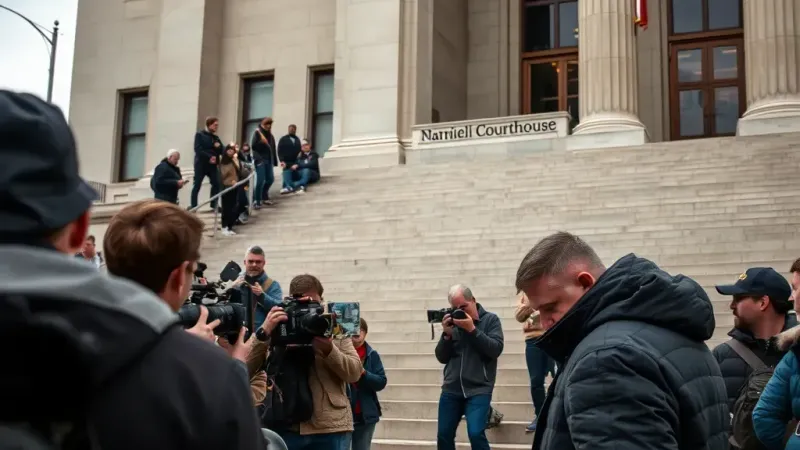
Just The News - Not The Noise reported that a federal jury convicted Huawei in New York on Tuesday, marking a dramatic courtroom chapter in the ongoing tensions between international corporate giants and domestic regulatory enforcement mechanisms.
The official framing presented by government communications routinely casts such verdicts as monumental triumphs for the rule of law, suggesting an unyielding wall of justice holding powerful foreign enterprises fully accountable for their actions within domestic jurisdictions.
The catch embedded in the courtroom arithmetic, however, provides a much sharper and more nuanced reality for those who look past the initial press releases. While the federal jury convicted Huawei of ten of twelve charges brought forward by the government, the panel notably chose to acquit Huawei of racketeering conspiracy, denying prosecutors a complete and total victory across every single count of the indictment.
When examining the sheer breadth of the legal battle, the numbers themselves tell a tale of heavy conviction balanced against distinct legal limitations. Huawei faced twelve charges in trial in New York, meaning the state managed to secure guilty verdicts on ten of twelve charges while ultimately stumbling on the much broader, highly complex racketeering conspiracy allegation that formed a cornerstone of the initial government filing.
The core of the government's legal strategy rested heavily on financial transactions, institutional trust, and regulatory compliance. Throughout the weeks of arguments, document reviews, and evidence presentation inside the courtroom, prosecutors alleged misleading banks regarding Iran dealings, framing these specific financial interactions as deliberate attempts by the enterprise to bypass established oversight and maneuver around international banking restrictions.
This high-stakes New York courtroom drama does not exist in any sort of historical vacuum divorced from prior geopolitical maneuvering. Long before the federal jury deliberated and reached its Tuesday verdict, United States authorities had already signaled their exceptionally aggressive posture by placing the company on a trade blacklist in 2019, an administrative action that initiated years of intense commercial isolation, supply chain disruptions, and ongoing economic friction between global trade powers.
Ultimately, the conclusion of the trial leaves both market observers and legal skeptics parsing the exact practical boundaries of the legal outcome. With a federal jury convicting Huawei of ten of twelve charges, yet acquitting Huawei of racketeering conspiracy, the case highlights the inherent friction and ultimate limits of complex corporate prosecutions, even when federal authorities and prosecutors bring a heavy battery of serious accusations into a New York courtroom.