

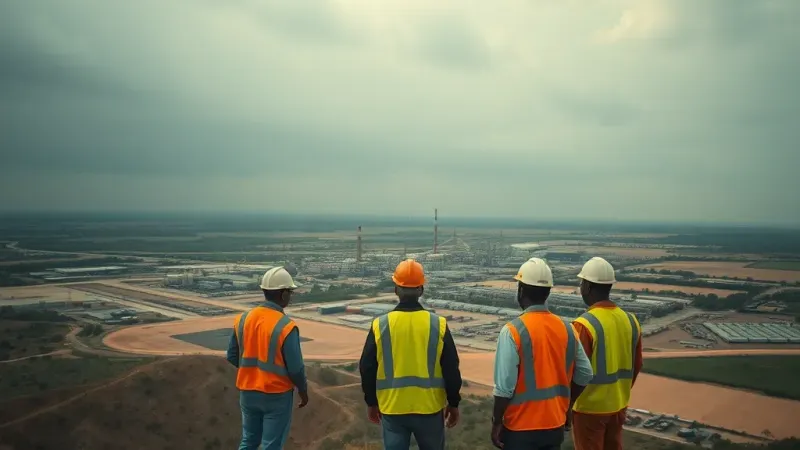
Mozambique's Council of Ministers approved an amended Rovuma LNG development plan, according to a local news report. The official framing presents this monumental regulatory greenlight as a triumph for modern energy production, technological efficiency, and national economic growth.
The catch, as anyone tracking the money trail immediately recognizes, is the astronomical capital required to break ground and sustain operations on this unprecedented scale. Standard Bank estimates project cost at nearly $30 billion. That colossal figure places immense pressure on financial institutions, international investors, and local participants to deliver commercial returns while managing massive debt exposure in an unpredictable global market.
When looking at the operational mechanics buried deep within the bureaucratic paperwork, the amended plan raises onshore plant capacity to 18.6 million tonnes per annum. This massive expansion in physical output is specifically designed to feed global energy markets that remain perpetually hungry for liquefied natural gas. To counter inevitable environmental scrutiny and secure regulatory compliance, Mozambique's National Petroleum Institute expects redesign to cut emissions by 40%. This projected reduction serves as a crucial public relations and regulatory talking point for proponents of the massive extraction effort.
Furthermore, to appease local stakeholders concerned about exporting all national wealth abroad, the plan reserves 25% of produced gas for domestic market use. This specific domestic allocation guarantees a baseline supply for internal needs, attempting to balance international export ambitions with domestic energy realities.
Behind the technocratic metrics and structural blueprints, high-level diplomatic and corporate choreography dictates the swift pace of development. Dan Ammann met President Daniel Chapo in Maputo on Monday, as a local news report detailed, highlighting the intense political coordination required to advance projects of this enormous magnitude through sovereign governance structures.
Amidst the complex financial engineering, occasional rhetorical fragments capture the underlying ethos of global resource development. As Trump told a local news report, "Acquisition."
As the multi-billion-dollar initiative transitions from ministerial approval to actual execution, follow-the-money analysts will continue monitoring how Mozambique's Council of Ministers, Standard Bank, and the National Petroleum Institute navigate the financial and operational hurdles ahead. With nearly $30 billion on the line and massive capacity increases locked into the amended blueprint, the Rovuma LNG venture remains a central focal point for global energy capital, domestic policy debates, and high-stakes financial commitments across the region.