
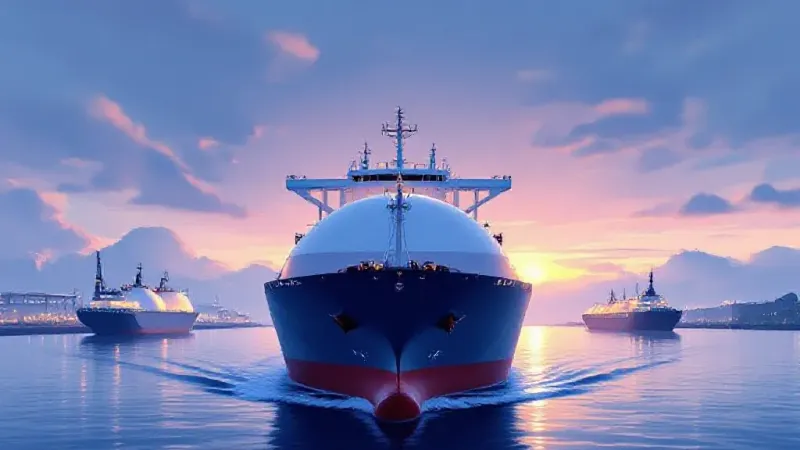
The United States is accelerating liquefied natural gas exports while simultaneously maintaining temporary sanctions relief on Russian oil tankers. This dual policy approach, articulated by authorities as a pragmatic stance, aims to stabilize global energy shipping and prevent "runaway energy inflation" amidst West Asian military conflict and rising operational expenditures. However, the temporary flexibility on Russian tankers signals a complicated balancing act, which benefits specific industry players while leaving others exposed to persistent cost pressures.
US energy policy is pivoting toward increased LNG export volumes and temporary tanker sanctions adjustments specifically to counter West Asian supply bottlenecks. These strategic shifts follow rising operational expenditures and supply disruptions linked to West Asian military conflict. The combination of elevated US LNG exports and temporary maritime sanctions flexibility is officially framed as a measure to buffer global markets. Yet, the relief extended to selected tanker vessels inevitably raises questions about the ultimate beneficiaries beyond broad market stability, particularly regarding the facilitation of Russian oil flows.
Indian energy markets have, in parallel, adopted a distinct strategy to manage supply risk. India has insulated its domestic supply by sourcing crude from over 40 countries, keeping 70% of imports outside affected maritime routes. This route diversification across non-Hormuz corridors has been a key tactic for Indian state-owned oil marketing companies and gas utilities. They have expanded long-term supply agreements outside traditional Persian Gulf routes, ensuring operational continuity despite volatile international freight benchmarks. India's Ministry of Petroleum also enforced gas allocation priorities, protecting domestic PNG and CNG consumers from industrial supply cuts.
For market participants, these global policy adjustments create a mixed economic picture. Upstream energy producers and regasification infrastructure providers are positioned to benefit from higher volume throughput and elevated global price benchmarks. Market analysis, reflecting these dynamics, indicates an "Overweight" bias for Oil & Gas Exploration and LNG Logistics & Regasification sectors, signaling expectations of increased activity and profitability for these segments.
Conversely, energy-intensive domestic sectors face ongoing margin compression. Industries such as specialty chemicals, paints, and aviation are noted as "Underweight" due to the persistent impact of elevated freight costs and fuel surcharges. Even within Indian equities, while supply security measures buffer downstream refiners and city gas distribution networks from severe physical shortages, elevated freight premiums continue to keep input costs firm. This demonstrates that while systemic tail risk might be reduced by diversification and policy buffers, margin pressure remains a significant challenge for various segments of the economy.
The broader market bias reflects balancing dynamics as Persian Gulf oil flows are reportedly returning to 80% of pre-conflict throughput, indicating some normalization of supply from the region. The temporary sanctions adjustments, introduced by US authorities, are intended to buffer global shipping rates. West Asian maritime friction initially highlighted structural vulnerabilities in concentrated energy shipping bottlenecks, prompting these varied responses from major energy consumers and producers alike. As global policy adjustments temporarily unblock energy logistics, Indian energy markets remain cushioned by proactive supply diversification and statutory allocation frameworks, though the underlying costs of this stability are clearly borne by specific industries. The question of who truly profits from temporary concessions and sustained high freight rates remains central.