
Oil markets are reportedly counting down the days until the November 3 midterm elections in the US, with expectations of impending hostilities rising into next month. This anticipation arrives even as last-minute efforts to negotiate de-escalation are ongoing, with Qatar and Pakistan reportedly mediating between the Trump administration and Tehran. These diplomatic maneuvers are noted to be temporarily capping the upside for ICE Brent at $115 per barrel, an official framing that begs a closer look at underlying market realities.
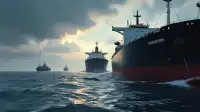
The numbers suggest a market pricing in significant risk, rather than being held in check. October has seen the most acute escalation in maritime attacks in eight months since the US-Iran conflict began, with over 30 incidents recorded in the Strait of Hormuz and surrounding waterways, a sharp increase from 14 in September. These attacks are not confined to vessels attempting surreptitious transit; a crude tanker was targeted in Iraq’s exclusive economic zone, signaling a broader threat. VLCCs, the largest crude tankers, account for 28% of all drone and missile attacks in the Persian Gulf, with 32 impacted ships representing almost 4% of the global VLCC fleet.
Such widespread targeting translates directly into soaring costs. Freight rates from the Gulf remain elevated, with a Saudi Arabia-China voyage still costing around $33 per barrel. Regional demurrage rates have been climbing since mid-August, reaching a current level of $1,000,000 per day. The UKMTO, a maritime security alert provider, has admitted that reporting on these strikes is becoming increasingly difficult as transiting ships opt to sail unnoticed, and charterers are wary of pushing freight rates even higher. This lack of transparency indicates a market accepting hidden risks and costs, with benefits accruing to those who can charge for heightened risk exposure.
Simultaneously, the Saudi-Houthi conflict appears to be gaining self-sustaining momentum. Yemen's Houthis claimed a ballistic missile strike hit Saudi Arabia's 550,000 b/d Ras Tanura refinery, causing a fire and disrupting operations. An earlier attack in March had shut the plant for three months. This persistent regional instability forms a critical backdrop to the broader geopolitical picture.
Against this volatile landscape, OPEC+ is expected to hold December output targets steady at its upcoming meeting. Seven core members are reportedly focusing on 2027 production quotas, having completed the roll-back of 1.65 million b/d voluntary cuts, which were reportedly disrupted by the Hormuz crisis. The US, meanwhile, is considering extending its truce with China on port charges for Chinese-linked ships by two months to January 9, aiming to preserve a suspension of tit-for-tat fees that previously imposed millions of dollars per port call and raised freight costs.
On the corporate front, consolidation in the US gas sector continues. US gas producer EQT has agreed to acquire Range Resources in a $13 billion all-stock deal, creating the largest US gas company with a combined net output of over 9 bcf/d. Separately, US energy firm Ovintiv will acquire Canada’s Logan Energy in a $0.9 billion all-cash deal, adding around 20,000 boe/d of production and 266,000 net acres across the Montney shale play. In exploration, ExxonMobil reported a commercial discovery with its Rockhead-1 well offshore Guyana, its first drilling success since the 2024 Hatchetfish find, with an estimated resource of 500-600 million barrels.
Other national energy moves are also notable. Singapore’s state gas buyer GasCo launched its first ever LNG term supply tender after neighboring Indonesia announced it would slash pipeline gas exports by 15% to 31 MMCf/d, just as Singapore plans to add five new gas-powered plants. The province of Alberta called on the Carney government to repeal Canada's 2019 West Coast tanker ban, backing a proposed 250,000 b/d crude-by-rail route. Malaysia's government has proposed extending the lifespan of its existing coal-fueled power plants, despite an earlier pledge to retire coal by 2044, with coal accounting for 56% of current generation. In the UK, the Burnham government is considering fast-tracking a small number of oil and gas tiebacks before pending legislation introduces Transitional Energy Certificates, which would extend existing fields but preserve the country’s exploration ban. The Trump administration is also planning to relax rules on methane emissions from oil and gas operations, including exemptions for wells producing up to 15 boe/d, projecting an incremental output of 210 million barrels for older and depleted wells.
Broader market signals also warrant attention. Iron ore prices fell to their lowest since September 2024, driven by weak Chinese demand and thin margins expected to curb fourth-quarter steel consumption, sending Dalian iron ore futures below the $100 per tonne threshold. In trade policy, the European Union may introduce quotas or tariffs on Chinese chemicals, furniture, and machinery from early 2027, seeking to replicate its recent import caps on hybrid vehicles as it aims to narrow its €360 billion trade deficit. These interconnected developments paint a picture of global markets navigating significant political and economic currents, where official narratives often clash with the cold calculus of risk and return.