

TokenPost reported that President Donald Trump expressed openness to legislative cooperation with Democrats regarding health care. The official framing presents these sudden diplomatic overtures as a constructive, bipartisan pathway toward solving stubborn legislative gridlocks in Washington.
The catch behind this unexpected olive branch involves a radical reshaping of federal borrowing limits, consumer lending restrictions, and foreign policy assessments that could upend conventional political alignments. Who benefits from these sweeping proposals remains the pressing question for skeptics parsing the administration's shifting rhetoric.
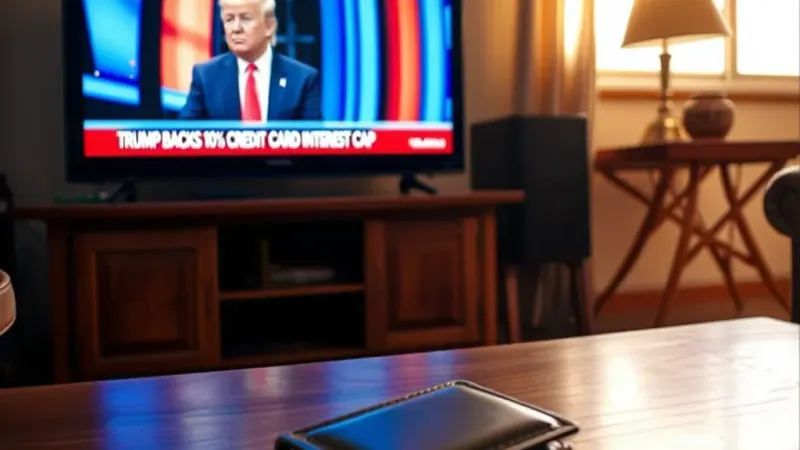
During a November 21 interview, Donald Trump endorsed a temporary 10 percent limit on credit card interest. This specific proposal targets the consumer lending sector directly, aiming to cap borrowing costs for everyday citizens. Alongside the credit card rate limitation, Donald Trump characterized Democratic leader Hakeem Jeffries as reasonable. This personal characterization marks a notable departure from standard partisan hostility, opening a potential channel for future negotiations.
Expanding further into domestic legislative priorities, Donald Trump expressed openness to legislative cooperation with Democrats regarding health care. This health care outreach parallels the warming relations hinted at with opposing party leadership, suggesting a broader willingness to trade policy concessions across the aisle.
The intersection of a temporary 10 percent limit on credit card interest and the suggested elimination of the federal debt ceiling creates a dual shock for traditional fiscal policy. Banks and credit institutions must grapple with the sudden prospect of capped lending returns, while federal budget monitors must process the complete removal of traditional borrowing caps designed to prevent runaway government expenditures.
Shifting from domestic policy to federal fiscal architecture, Donald Trump suggested eliminating the federal debt ceiling to avoid national bankruptcy. The proposal to completely scrap the debt ceiling bypasses traditional congressional showdowns over government borrowing limits, offering a stark alternative to standard fiscal restraint narratives pushed by orthodox economists and conservative budget hawks alike.
On the international stage, Donald Trump addressed foreign policy complications by stating that twenty-five thousand monthly casualties complicate the Ukraine conflict. This grim statistical assessment highlights the human cost and strategic difficulty inherent in the ongoing foreign entanglement, linking the sheer volume of monthly casualties directly to the broader geopolitical deadlock.
These disparate policy points—spanning consumer credit rate caps, health care cooperation, Democratic leadership assessments, debt ceiling elimination, and foreign war casualties—collectively outline a complex and unorthodox political platform. As financial institutions, market participants, and political observers attempt to reconcile these sweeping pronouncements with actual legislative realities, the total lack of detailed execution plans leaves banking entities and government watchdogs waiting for concrete statutory text to emerge from these sudden bipartisan overtures.